
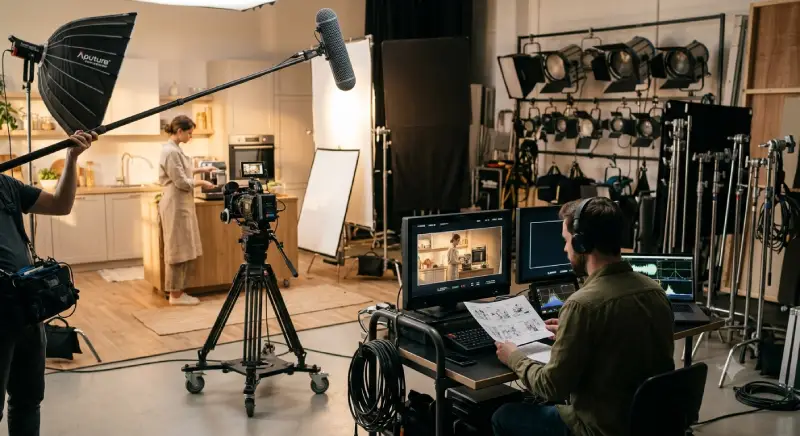
Brand storytelling through video is not a single deliverable. It is a set of production services, each built to do a specific job in how audiences discover, understand, and emotionally connect with a brand. The sections below cover exactly what those services are, what each format is designed to accomplish, and how to decide which combination makes sense for a brand’s goals. AD.JUST Video Production has spent over a decade producing this work for companies including Cirque du Soleil, Viski, Webflow, and Wilson Sports.
What Brand Storytelling Video Production Actually Covers
Most brands come to a video production agency thinking they need a video. What they actually need is a decision about which type of video will serve their specific goal: brand awareness, product education, social proof, or sales conversion.
Top agencies do not treat all video production the same. They separate services by story format, audience stage, and the platform on which the content will live. Each service has a distinct creative structure, production scope, and intended outcome.
Brand Films: The Flagship Storytelling Format
A brand film is the cornerstone of brand storytelling video production. It is typically 90 seconds to four minutes long and focuses on communicating who a brand is, what it stands for, and why that matters to its audience, without directly selling a product.
Brand films work by creating emotional alignment. They are built around a narrative: a challenge the brand overcame, a mission it is pursuing, or a relationship it has built with its customers. According to Content Marketing Institute benchmarks, branded video content outperforms display advertising by a factor of five in brand recall and purchase intent.
This format suits brands building long-term recognition, launching in a new market, or repositioning after a major change. It is the content that lives on a homepage, plays at conferences, and anchors a brand’s presence on YouTube. AD.JUST’s branded video content agency details how this format is structured for long-term brand recognition and audience retention.
E-Commerce Product Videos for Amazon and DTC Brands
For brands selling physical products, the product storytelling video bridges the gap between product demonstration and emotional brand connection. This is not a simple product showcase. It is a short-form narrative that places a product inside a context the target buyer actually inhabits.
An e-commerce product video for a premium barware brand does not just show the product features. It shows the occasion, the ritual, and the feeling associated with using it. That context drives conversion at the listing level and builds brand recognition beyond the transaction.
AD.JUST Video Production produced over 100 e-commerce product videos for Viski, a premium barware brand, in under four months. The campaign aligned the visual language of each video with Viski’s upscale aesthetic and drove meaningful lift across their Amazon listings and direct-to-consumer website. This is the difference between a production shop and a brand storytelling agency: the product is always in service of a story.
For Amazon sellers, this format also follows specific technical requirements: aspect ratios, length caps, and file standards. An experienced agency builds these into the production workflow from day one.
Social Media Brand Content: Reels, Shorts, and Stories
Social media brand storytelling operates on a completely different logic from traditional video. The first two seconds determine whether the viewer stays or scrolls. The format is determined by the platform, not creative preference.
Top agencies treat social media video production as a distinct creative discipline, not a repurpose of longer content. The strongest social brand content combines a hook that earns attention, a product or message woven naturally into an existing trend or behavior, and an emotional payoff that makes the brand feel native to the platform rather than intrusive.
A social media brand content strategy at the brand level typically involves multiple content pillars: behind-the-scenes footage, product in use, cultural moment content, and community-driven UGC-style material. Each pillar serves a different audience relationship.
When AD.JUST produced a campaign for Aiper, the team created six short-form videos for Instagram and TikTok, built around trending formats that fit the product naturally. One of those videos reached over 16 million views on Instagram. The performance came from matching trend behavior, not just filming the product well.
Corporate Brand Videos for Companies and Teams
Corporate brand video production covers a wide range of content: leadership communications, company culture films, employer brand content, event recaps, and recruitment videos. These are not internal communications afterthoughts. They are brand assets that shape how a company is perceived by talent, clients, and investors.
The most effective corporate brand videos share a common structure: they ground the brand in a specific point of view, feature real people where possible, and speak to an audience evaluating the company as a partner, employer, or vendor.
AD.JUST produced corporate video production content for Webflow’s WKO 2026 conference, deploying a full production crew across four days to capture keynotes, breakout sessions, drone footage, and behind-the-scenes moments. The team then delivered daily social media reels and a cinematic event recap. That content served multiple audience functions from a single production investment: event promotion, talent attraction, and brand positioning.
Customer Story and Testimonial Videos
Customer story videos are the most underused format in most brand content strategies. They work because they shift the authority from the brand to the customer, a third-party voice that carries more credibility than any amount of brand messaging.
The strongest customer story videos are not testimonials in the traditional sense. They are short documentary segments that follow a real customer through a challenge, a decision, and an outcome. The brand’s role in that story is supportive rather than central, which is exactly what makes them believable.
These videos perform across multiple stages of a buyer journey: they build credibility at the top of the funnel, support consideration in the middle, and directly influence decisions at the point of conversion.
Branded UGC and Influencer Content
Creator-style content produced with brand direction, sometimes called branded UGC or studio UGC, sits at the intersection of social proof and brand storytelling. It is produced to look authentic and peer-driven, but is shot with the creative alignment and quality control that a production agency provides.
This format has become essential for e-commerce brands and direct-to-consumer companies running paid social campaigns. UGC-style video consistently outperforms polished brand video in click-through rates on paid platforms because it does not register as advertising in the same way.
For brands working on Amazon, social media video promotional campaigns, or direct-response social ads, branded UGC is often the highest-ROI format in the production stack.
What Separates a Brand Storytelling Agency from a Production Shop
The difference is not the quality of the camera or the size of the crew. It is whether the agency starts with the story or with the shot list.
A production shop executes what a client requests. A brand storytelling agency begins with audience understanding: who is watching, what they already believe, what story will shift that belief, and which format will deliver that story most effectively on the platform where the audience lives.
The creative direction, the script structure, the pacing, the music choice, the casting: all of these are story decisions before they are production decisions. Agencies that understand this structure content around narrative goals rather than technical outputs.
That distinction is visible in the work. Over a three-year partnership with Cirque du Soleil across Los Angeles, Las Vegas, and New York, AD.JUST Video Production functioned as embedded storytellers, capturing authentic backstage moments that reflected the brand’s culture. The content produced fueled Cirque’s social, recruitment, and brand initiatives simultaneously, because it was built around story rather than spectacle.
Key Takeaways
As of 2026, brand storytelling video production includes multiple distinct service types: brand films, e-commerce product videos, social media brand content, corporate videos, customer story videos, and branded UGC. Each format is built for a different audience relationship, platform context, and brand goal. Top agencies differentiate from production shops by leading with a narrative strategy rather than technical execution. The right combination of services depends on where a brand is in its growth, which audience segment it is trying to reach, and where that audience spends its attention. Brands investing in the right format for the right goal consistently see stronger results than those producing video without a clear storytelling framework.
Frequently Asked Questions
What is brand storytelling video production?
Brand storytelling video production is the process of creating video content that communicates who a brand is, what it stands for, and why it matters to its audience, using narrative structure rather than direct product promotion. It includes brand films, social media content, customer stories, and other formats that build emotional connection over time.
How is a brand film different from a product video?
A brand film focuses on a brand’s identity, values, and story. A product video focuses on a specific product’s features, benefits, or use case. Brand films build long-term recognition; product videos drive immediate understanding and conversion. Many brands use both as complementary assets in their content strategy.
What video format works best for social media brand storytelling?
Short-form vertical video, including Reels, Shorts, and Stories, performs best on social platforms for brand storytelling because it matches how people naturally consume content on mobile. The most effective social brand content is built around trends and emotional hooks rather than scripted messaging.
How long does brand video production typically take?
Most brand video production projects take four to eight weeks from strategy to final delivery, depending on production scope, location complexity, and the number of revisions in the feedback cycle. Simpler formats like social media videos can be turned around faster.
How do I know which brand storytelling service my business needs?
The right service depends on your goal and your audience. If you are building brand recognition, a brand film is the foundation. If you are selling products on Amazon or DTC platforms, e-commerce product videos and branded UGC will serve you best. If you are targeting social audiences, short-form platform-native content is the priority.
What should brand storytelling video production cost?
Costs vary based on format, scope, locations, and number of deliverables. A single brand film typically starts in the mid-thousands and scales with production complexity. E-commerce product video campaigns for multiple SKUs are often structured as volume packages. A good agency provides transparent pricing based on your specific goals and production requirements.
Ready to Build Your Brand’s Story on Video?
Every brand has a story worth telling. The question is which format will tell it most effectively for the brand’s audience and goals. AD.JUST Video Production works with e-commerce brands, DTC companies, and major corporations to build video content strategies that combine the right formats with the right creative approach. Contact AD.JUST Video Production to start the next brand storytelling project.